
Knowing how to prepare your home for a hurricane comes down to one idea: a storm attacks the weakest point in the building, and everything you do beforehand is about removing those weak points before the wind finds them. A hurricane does not damage a house evenly. It gets in through one failed window, one lifted garage door, one gap in the roof, and from there the wind and water do the rest. Harden the openings and the shell, and the whole home holds together far better.
This guide walks the house from the outside in, in the order that matters most. For the storm-season timeline and what to do as a system approaches, see our hurricane preparation overview, and for the supplies your family needs, our hurricane kit checklist covers it. This one is about the building.
Start with the openings, because that is where storms get in
Your windows and doors are the front line. When a window breaks in a hurricane, it is rarely the wind alone. It is a branch, a roof tile, or a piece of someone else’s fence traveling at storm speed. Once the glass is gone, wind and rain pour in, and the sudden rise in internal pressure pushes up on the roof and out on the walls from the inside. A single broken window can put the entire structure at risk.
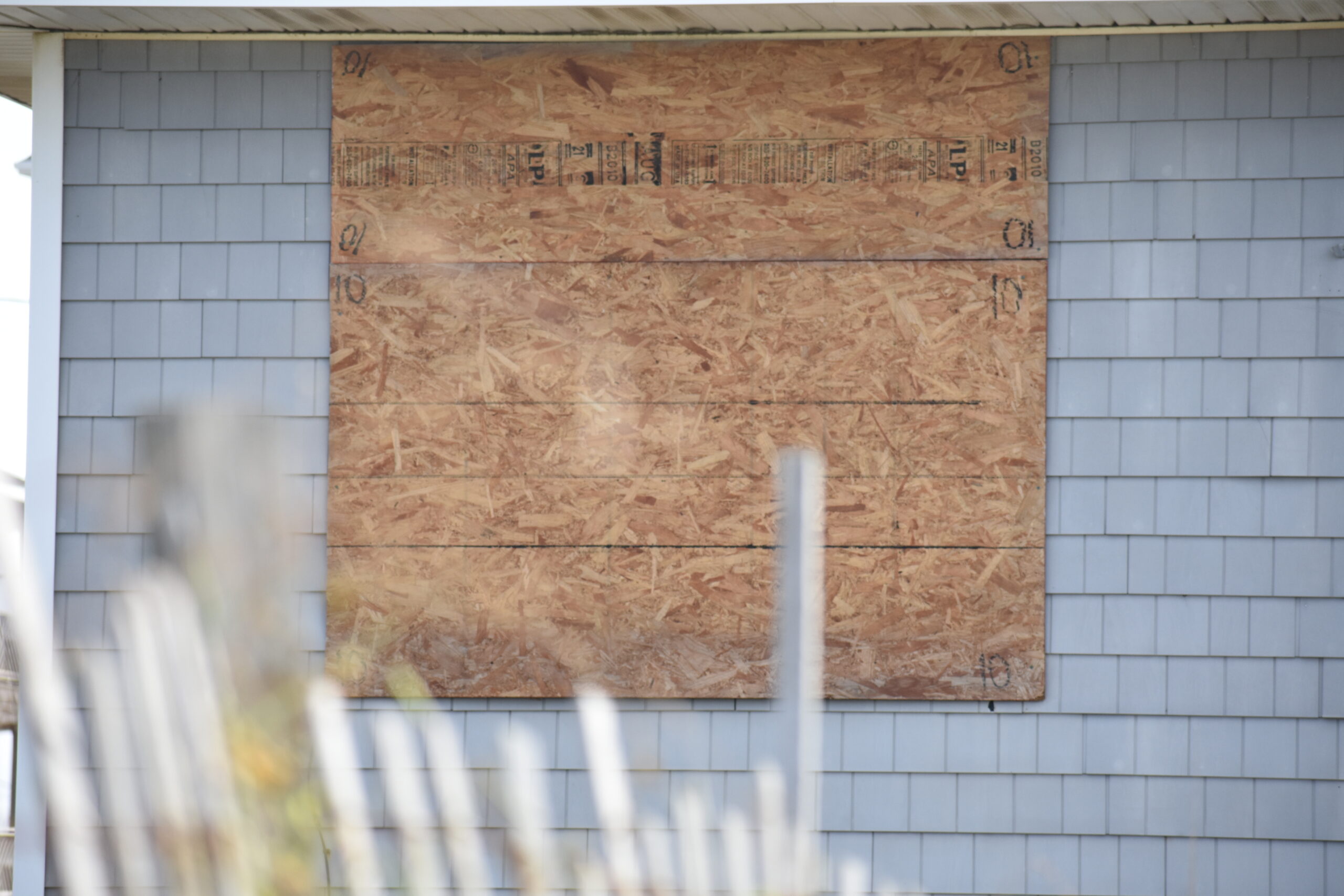
There are two ways to protect an opening. The temporary way is to cover it. If you have no other protection, exterior-grade plywood at least 5/8 inch thick, cut to fit and properly anchored, is better than bare glass. One thing to skip entirely: taping your windows does nothing to stop them from breaking, and it can create larger, more dangerous shards. Both FLASH and state emergency officials have been trying to retire that myth for years.
The permanent way is impact windows and doors. Impact-rated units use laminated glass bonded to a tough interlayer, so when something strikes them the glass can crack but stays in the frame and the opening stays sealed. There is nothing to install when a storm forms, nothing to store, and the protection is there every single season without you lifting a finger. It is the difference between scrambling to board up before every threat and simply locking the door. We explain how the glass actually works in our piece on upgrading from non-impact to impact windows.
Do not forget the sliding glass doors and the entry doors. A wide expanse of ordinary sliding glass is one of the most vulnerable surfaces on a Florida home, which is why impact-rated patio and sliding glass doors matter as much as the windows around them.
The garage door is the weak point people forget
The garage door is the largest opening in most homes and often the least reinforced, which makes it a common failure point in a hurricane. If it blows in, wind rushes into the garage and pressurizes the house from within, and that pressure can lift the roof and blow out doors and windows from the inside. Protecting it protects everything downwind of it.
If your garage door is not rated for high wind, you have two options: a bracing kit designed for your specific door, installed before the storm, or an upgrade to a hurricane-rated door built to take the pressure. If you do nothing else structural this season, have your garage door assessed. It punches above its size in how much damage it can prevent.
Work up to the roof and soffits
The roof takes the full force of the wind, and small problems become big ones fast. Before the season, have loose or missing shingles repaired, and check that flashing around chimneys, skylights, and vents is sound. Soffits are a quiet vulnerability, because wind driven up under the eaves can tear them loose and give water a path into the attic. Making sure soffits are secured and vents are intact is cheap insurance against a wet ceiling.
If your roof is older or you are unsure of its condition, a pre-season inspection by a licensed roofer is worth the visit. Roof straps and improved connections are also part of what the My Safe Florida Home program can help pay for, alongside impact openings, for homeowners who qualify.
Keep the water out
Wind gets the headlines, but water does an enormous share of hurricane damage, and much of it is preventable. Clean your gutters and downspouts so water actually drains instead of backing up onto the roof or pooling against the foundation. Reseal gaps around windows, doors, and any penetration where a wire or pipe enters the house. Check that the ground slopes away from the foundation and that any drainage or pump system is clear and working. None of this is glamorous, and all of it keeps water on the outside where it belongs.
Your yard becomes ammunition
In a hurricane, anything loose outside is a potential projectile aimed at your windows or your neighbor’s. Before a storm, bring in or tie down patio furniture, grills, planters, trash cans, and anything else that can be picked up by the wind. Trim dead or overhanging tree limbs during the off-season, and keep larger trees healthy and pruned so they are less likely to come down. A well-kept yard is not just tidy, it removes the debris that breaks windows in the first place.
Backup power and the final walk-through
Once the shell is handled, plan for the lights going out. A portable or standby generator, used safely and well away from the house, keeps essentials running, and a stocked supply kit covers the rest. When a warning is issued, do a last pass: close and lock every window and exterior door, close the garage, and keep interior doors shut during the storm so the pressure inside the home stays compartmentalized rather than building against your roof. The Florida Division of Emergency Management publishes a helpful statewide checklist at floridadisaster.org, and FLASH keeps detailed hardening guidance at flash.org.
Harden once, and stop dreading the forecast
Here is the case for doing the structural work now rather than the plywood scramble later. Every temporary measure, boards, tape, bracing you install in a hurry, has to be repeated for every threat, and it is done in the worst possible conditions, often in a rush the day before landfall. Permanent upgrades flip that. Impact windows and doors, a reinforced garage, a sound roof, and good drainage make your home ready on a random Tuesday in June and keep it ready straight through November, with no ladders, no plywood, and no last-minute run to a sold-out hardware store.
That readiness is exactly what Direct Remodels is built to deliver on the openings. Because we buy our windows and doors straight from the manufacturer and keep the whole job, measuring, ordering, and installing, under one roof, the impact protection on your home is installed to code by the same team that sold it to you. There is no subcontractor to blame if a detail needs fixing, and a storm-rated window only performs if it is anchored and sealed correctly, so who does the work is not a small detail. If you want to see where your home stands, a design consultant will inspect every opening during a free in-home estimate and give you a straight number with no pressure. Call 813-371-1911 or request your free estimate online.
Frequently asked questions about preparing your home for a hurricane
What is the single most important thing to protect?
The openings. Windows, doors, and the garage door are how a hurricane gets inside and pressurizes the house, which is what leads to roof and wall failure. Protecting them, ideally with permanent impact-rated windows and doors, does more than almost anything else.
Is plywood as good as impact windows?
No. Properly installed plywood is a reasonable stopgap if you have no other protection, but it has to be measured, cut, and anchored before every storm, and it leaves you in the dark inside. Impact windows are permanent, always in place, and let you see out while protecting the home.
Should I tape my windows before a storm?
No. Taping does not keep glass from breaking and can produce larger, more dangerous shards. Skip the tape and put your effort into real opening protection instead.
Why does the garage door matter so much?
It is usually the biggest and weakest opening. If it fails, wind fills the garage and pressurizes the whole house from inside, which can push the roof up and blow out other openings. Bracing it or upgrading to a rated door protects everything else.
Can any of this be covered by a grant?
It can, for homeowners who qualify. The My Safe Florida Home program offers matching grants toward hurricane-hardening upgrades like impact windows and roof improvements after a free state inspection. Funding runs in cycles, so it is worth checking eligibility early.