
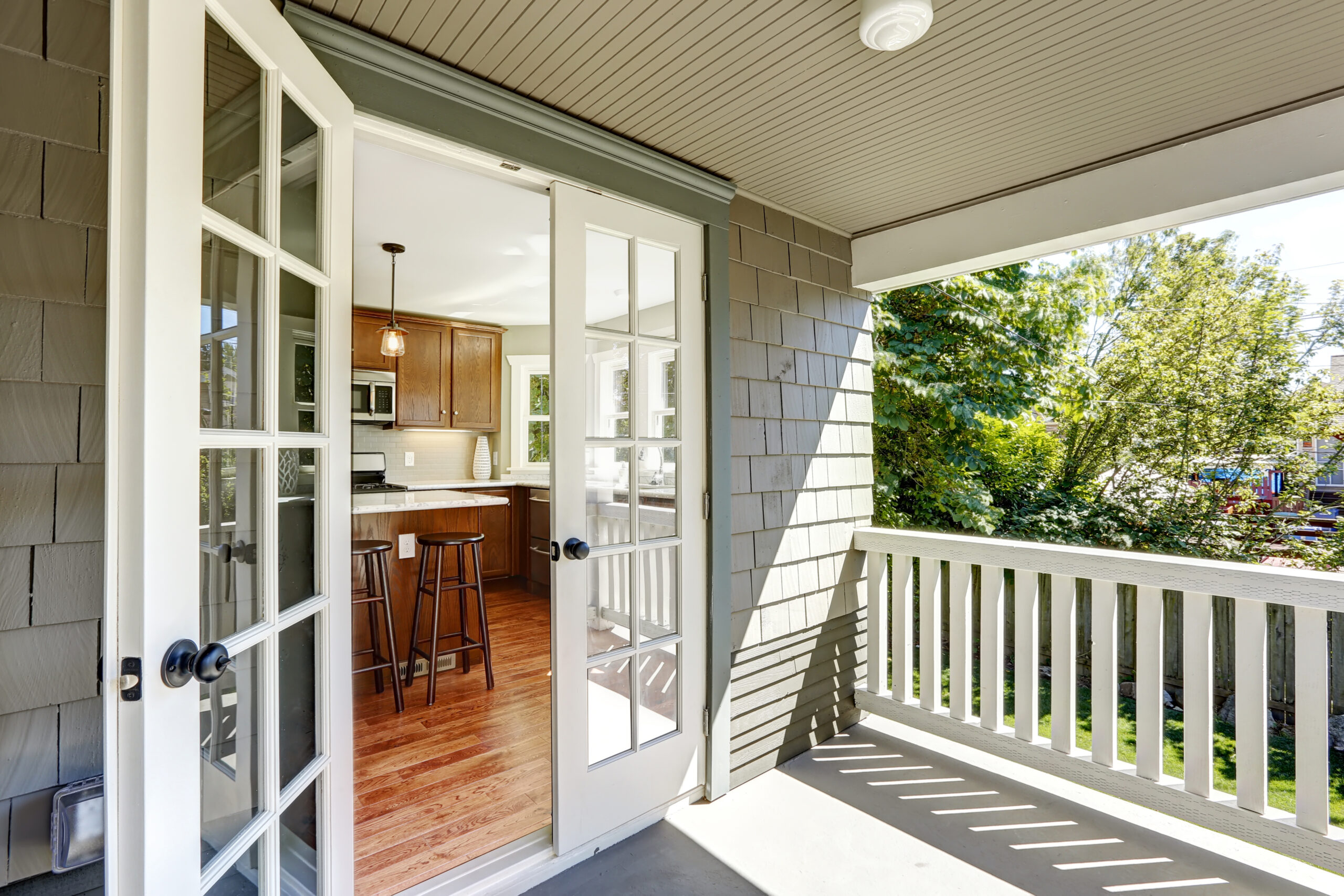
The benefits of french doors are easy to see the moment you stand in front of a pair: light pours in, the wall seems to open up, and a room that felt closed off suddenly feels connected to the yard beyond. French doors have been a favorite for generations because they do something a solid wall and a single door cannot. They turn an opening into a feature.
If you are weighing them for your Florida home, it helps to know exactly what they do well, where they fall short, and one thing that matters here more than almost anywhere else: how an exterior door holds up when a storm arrives. Let’s walk through all of it.
What a French door actually is
A French door is a glazed door, mostly glass, set in a frame, and usually hung in pairs that meet in the middle with no post between them. Open both sides and you get a single wide opening rather than a narrow doorway. You will see them used two ways. Interior French doors divide rooms while keeping sightlines and light open, think of a home office or a dining room you can close off without making it feel like a closet. Exterior French doors lead outside, to a patio, lanai, or garden, and that is where most of the benefits people care about show up.
That distinction matters in Florida, because an exterior door is not just a design choice. It is part of how your home stands up to weather.
The real benefits of french doors
Natural light, and a lot of it. The biggest draw is the glass. A pair of French doors brings daylight deep into a room in a way a window alone often cannot, which makes spaces feel larger and more open. More daylight indoors is genuinely good for how a room feels and functions during the day.
Indoor-outdoor flow. When both panels swing open, you are left with a wide opening instead of a doorway. That makes a difference when you are carrying furniture, hosting a party that spills onto the patio, or just want the living room and the lanai to feel like one space on a nice day. A sliding door can only ever open half of its width. A double French door opens the whole thing.
Fresh air on the days that allow it. On mild days, opening both doors lets air move through the house in a way a single door cannot match. It is a pleasant, low-effort way to air the place out without running the AC.
Style and resale appeal. French doors read as an upgrade. They suit traditional and modern homes alike, come in a range of materials and finishes, and are widely considered a desirable feature by buyers, which can help your home show better when it is time to sell. You can see the open, glassy look in finished projects in our gallery.
Energy performance, when the glass is right. A well-built glazed door with modern insulated glass limits heat transfer and drafts, which helps keep indoor temperatures steady. In Florida, the glass package is what makes or breaks this. Older single-pane French doors leak conditioned air and let the sun cook the room. Insulated, Low-E glass is what actually keeps your cooling bill in check.
The honest tradeoffs
No door is all upside, and a good decision comes from knowing the downsides too.
More glass means more surface to secure and to seal. A cheap or poorly installed French door can be easier to force than a solid door and more prone to air and water leaks at the meeting point in the middle. Both problems come down to quality and installation rather than the style itself, but they are real, and they are worth asking about before you buy. French doors also swing, so they need clear floor space to open, which a sliding door does not. And a quality glazed door costs more than a basic slab door up front.
None of that rules them out. It just means the door is only as good as the glass, the hardware, and the crew that installs it.
The Florida reality check every exterior door has to pass
Here is the part a lot of French-door articles skip, because most of them are not written for Florida. Any exterior door on a Florida home should be impact-rated. Standard French doors, the kind featured in most design roundups, are usually not built to stop a flying branch or a piece of debris in a hurricane, and a door full of ordinary glass is a weak point in an otherwise protected home.
Impact-rated exterior doors use laminated glass bonded to a tough interlayer, the same idea as an impact window, so the glass can crack under a hit but stays in the frame instead of blowing into the room. In Florida that construction is not a luxury feature, it is tied to the building code. Exterior doors sold and installed here are expected to carry a Florida Building Code product approval, and you can look up a specific product’s approval through the state’s product approval system. On top of the storm protection, impact-rated doors and windows can also make you eligible for homeowners insurance discounts under Florida law, though the actual credit depends on your insurer and policy, so check with your provider.
So if you love the French-door look, the question is not just style. It is whether the door you choose will actually protect your home when it matters.
Getting the French-door feel with real storm protection
Direct Remodels does not build our business around French doors. What we do offer is the storm-ready way to get most of what people love about them. If you want that bright, glassy, indoor-outdoor feel, our impact patio and sliding glass doors deliver the light and the wide view while being engineered and installed to impact standards for Florida weather. And for the front of the house, our impact entry doors pair curb appeal with the same laminated-glass protection.
The advantage is in the name. We buy manufacturer-direct, one of the largest direct buyers in Florida, and we handle every step in house, from measuring the opening to the final inspection. No middleman, no outsourced install crew, no finger-pointing if something needs to be made right. That matters even more with a glass door, because the rating on the glass means nothing if the door is not anchored and sealed correctly. You can see the full range on our windows and doors page.
If you are not sure which door fits your home, a Direct Remodels design consultant can walk you through the options during a free in-home estimate, measure everything, and give you a real number with no pressure. Call 813-371-1911 or request your free estimate online.
Frequently asked questions about french doors
Are French doors a good choice in Florida?
They can be, as long as the exterior door is impact-rated. Standard French doors are often not built for hurricane conditions, so for a Florida home the priority is a door with laminated impact glass and a Florida Building Code product approval, whatever the style.
What is the difference between French doors and sliding glass doors?
French doors are hinged and swing open, and a double set opens the full width of the opening. Sliding glass doors glide on a track and only ever open about half their width, but they take up no floor space to operate. Both can be ordered as impact-rated patio doors.
Are French doors energy efficient?
They can be, but it depends almost entirely on the glass. Insulated, Low-E glass limits heat transfer and helps keep cooling bills down in the Florida sun. Older single-pane glazed doors do the opposite, so the glass package is the thing to ask about.
Are French doors secure?
Quality matters here. A well-made, properly installed door with strong hardware and laminated glass is hard to force, while a cheap or poorly hung one can be a weak point. Impact-rated laminated glass adds a real security benefit because it resists being smashed quickly and quietly.
Does Direct Remodels install French doors?
Our focus is impact-rated patio, sliding glass, and entry doors built for Florida storm season. If you love the French-door look, talk to a design consultant about impact-rated options that give you the light and openness with the storm protection your home needs.